Outreach
I gained much of my sense of wonder being in the field and observing natural habitats, yet recent news and scientific reports have brought to light that this is not the experience for many people outdoors or in scientific spaces. Students and scientists of color may feel excluded or isolated in science due to very little racial diversity, ethnocentric curricula and discriminatory behavior from colleagues or other students. Scientists with disabilities, gender or religious minorities, and non-native English speakers may similarly feel alienated because of lack of representation or discrimination. Additionally, although women now make up at least 50% of students receiving PhDs in ecology and evolution, men continue to have the more prominent voices in science. Through my experiences as a student, mentor and scientist in these fields, I show my commitment to diversity, equity and inclusion by initiating conversations on antiracism and inclusion, participating in outreach activities, and mentoring students.
When the pandemic hit in early 2020, I co-launched a summer-long virtual reading and programming group for the undergraduates in our lab to keep some lab cohesion. We planned to read papers on ecosystem cycling and teach R skills. However, when George Floyd was killed bringing nationwide attention to the issues of racism and the #BlackLivesMatter movement, and protests came to the streets near our campus, we felt that we needed to shift our focus. We spent the rest of the summer reading perspectives from Black scientists and having challenging discussions about our role in making science more antiracist and we continue these discussions in our lab today. The fields of ecology, evolutionary biology and conservation have historically been institutions which have upheld and promoted racism 19, and as students, we are part of these systems. One thing I learned from reading and listening to perspectives of people of color is that difficult conversations about racism and bias are an important first step to making science more equitable. As I have opened and participated in hard conversations, I have become aware of challenges that groups face and ways I can open doors in science to others.
One way that I have opened science doors during my PhD is through outreach activities, especially with groups who are normally underserved by scientists. Bridging gaps between scientists and the broader public is vital to sustaining biodiversity, both in our communities and across the natural world. I want to be known as a translational scientist, making sure education is a two-way street. As my passion for and knowledge of insect diversity has grown, I share with local community members, and learn what matters to them. During my time as a PhD student, I led community outreach in a variety of formats including elementary school presentations and assemblies, blogs, podcasts, art, Skype a Scientist presentations and citizen science surveys. I have made it a priority to mentor not only the students in our lab, but high school, elementary, and middle school students in the community. I participated in the AAAS workshop on Science Communication and Engagement with Religious Audiences and led training sessions on talking about science with religious groups, and have had several outreach experiences with religious groups, who sometimes feel antagonized by science and its potential political/religious consequences. I strive to make science accessible to all and quell science-adjacent concerns about things like anthropogenic climate change.
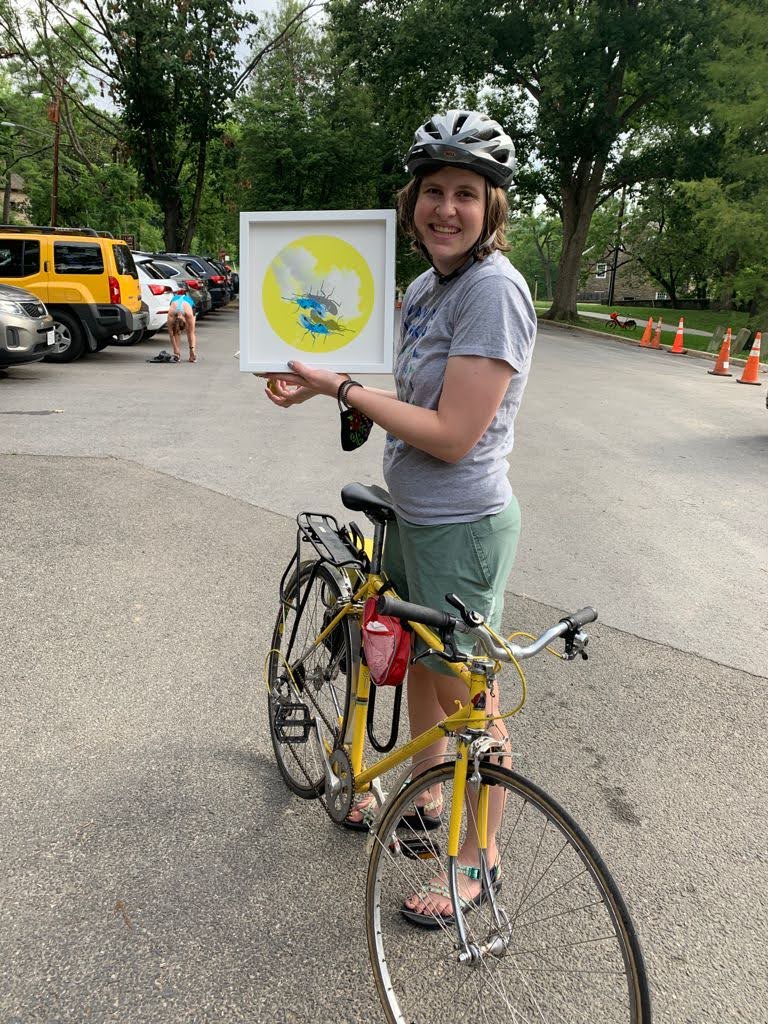 Artwork created in collaboration with Donna Davis
Another way I open doors in science is as a mentor. While at George Washington University, I have had an opportunity to work with many international students. As part of my undergraduate research, I spent several months in Brazil in the lab and field. Working under the direction of Portuguese-speaking mentors, I experienced some of the challenges of being an international scientist. In my struggle to learn Portuguese, I encountered the generosity of locals willing to slow down, seek to understand, and help me learn. It gave me a personal perspective into being a non-native speaker faced with navigating science. I prioritize promoting scientific diversity. Currently I participate in GWU’s “International Buddy” program, and mentor and edit manuscripts for international graduate students and visiting fellows. Although time-consuming, it is rewarding to see friends and fellow biologists succeed in their scientific endeavors despite the struggle of learning a new language.
Because many find computational skills daunting, I work to lower the barriers to make bioinformatics tools more accessible to biologists, elevating the questions and analyses researchers can use. I developed a High Performance Computing tutorial for students at GWU and I mentored students from different racial, religious, and cultural backgrounds including students from the LGBTQ community, in bioinformatics. I am thrilled to see all students, but especially those who come from marginalized groups succeed in bioinformatics.
Finally, I can open doors with my voice and my presence as a woman in the male-dominated fields of entomology and computational biology. At my undergraduate university, there were few women professors in our department, a factor that made me hesitant to see biology as a career option. Now, my goal is to become the mentor and faculty member I wish I had as a student. Not only can I provide a unique perspective, but as a woman I can serve as a role model and inspire the next generation of female students.